Showing posts with label Holy Cow!. Show all posts

Monday, July 15, 2013

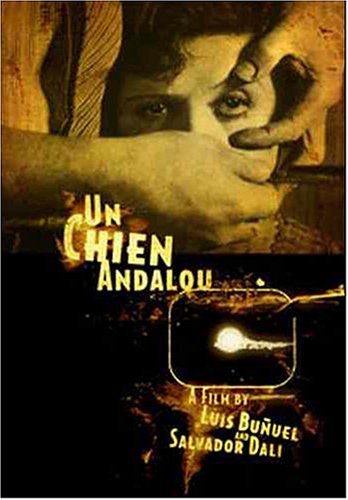
Un Chien Andalou (An Andalusian Dog) (1929) SKIP

Kim Wilson: 16 Minutes Of Your Life That Will  Never Come Back
Introduction: For all of your art fans out there, let me be perfectly clear on two counts. First, I am not a hater of avant-garde films In fact, I really love watching avant-garde films since they smuggle in abstract/controversial ideas while showing off abstract images. I would be the first to defend Zero De Conduite (1933) and the works of Jean Painleve if they are being attacked. The reason to my defense is that they have their own wonderful sense of imagery and narrative storytelling that are vital to great filmmaking. One of the main purposes of the movies is to create worlds that the viewers' imagination can journey to and enjoy that experience.
     Second, I don't hate or even dislike the creators of Un Chien Andalou (1929). In fact, I personally admire Salvador Dali and Luis Brunel for their creative geniuses. Their work is just so crazy that it ultimately reveals that a key ingredient of their souls is the power to imagine wondrous and cynical events happening in our surrealist dreamscapes.
     That's what Un Chien Andalou sadly forgot as it wants to be a shocking artsy exploration in the study of dreams that it comes off as pretentious/awful to the poor viewer's mind. Plus, it's highly unwatchable for both children and adults to watch due to its childish/foolish approach of throwing random crap on the screen with the sake of being scandalous.
     
 The Plot?: What plot is in this film? The images have nothing in common as they are too random and illogical to make sense to anyone except for art critics and psychologists. Even then, they will be saying swear words under their breath as there are no identifiable themes in Un Chien Andalou for those communities to find out and comment on. Why? The film simply doesn't care to put in themes, emotions, ideas or any established elements crucial for a good story to work. For the filmmakers, I applaud them for messing around with film conventions as they originally wanted to make a film about dreams as well as shock people. However, those people to shock with probably meant Brunel and Dali themselves as the images are too shocking and too disquieting for anyone's tastes.
         
Is it okay for kids: Since I already have pissed off hundreds of college art students with my roast on Un Chien Andalou, I will have the "pleasure" of stoking up the coals even more by advising parents not to even mention this atrocity to their kids at all as it has strong uses of both sexuality/nudity and graphic violence. There is a man who forcibly fondles a woman's breasts as he is a pervert. That same woman has her breasts as well as her buttocks shown in full glory for a few brief seconds. Another woman gets killed by a speeding car after she poked at a severed hand. A man has a hole in his hand with ants crawling around it. Speaking of insects, two dead donkeys are shown with maggots all over their eyes. Priests are seen being abused as a man pulls them and several miscellaneous objects across the floor. That same man is trying to sexually molest a woman trapped in her apartment.
        Perhaps the most disturbing scene in the movie occurs at the beginning. An unidentified man sharpens his razor and then proceeds to silt open a woman's eye. This act causes liquid to spill all over her skin. Even though the filmmakers used a dead calf's eye for that shot, it still looks unnerving realistic. In fact, I'm not surprised that people fell into clinical shock from that one useful scene.
Ironically, this made more sense as a painting. 
 
My Thoughts:   This film is what a mentally deranged person would make if they had no rules to follow by. Un Chien Andalou refuses to follow simple film grammar and it refuses to highlight their creators' intent in favor of making the viewer feel dirty and mentally unwell. I wasn't surprised when I found out that the main stars of the film committed suicide shortly after it was released nor was I disappointed when Luis Brunel had to arm himself with stones just in case the audience wanted to kill him for making the darn thing. This film can and will and has been known to drive anyone illegally crazy with its disrespect for their minds and intelligence. Un Chien Andalou might be one of the worst films I've ever seen in my entire life.


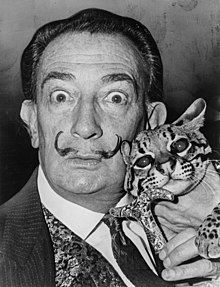
Shame on you, Mr. Dali! 

Sunday, May 5, 2013

Gun Crazy (1950) BUY 14+

       
Introduction:   I have never been a fan of film noir. Ever. The previous statement seems a little weird to me since I simply adore prime examples from the genre, such as Shadow Of A Doubt, The Night Of The Hunter, The Third Man, Sunset Blvd., The Fallen Idol, Strangers On A Train, Mildred Pierce, Citizen Kane, and Cat People. I also love watching mysteries with its dark story lines with complex characters and tense atmosphere. So why do I write myself off as a hater of film noir?
   Well, my reasoning is that these films tend to be way too cynical for my tastes as it represents a society that wants to chew up both the innocent heroes and wicked villains alike; then it wants to spit them up. Depressing. Another reason why I don't like film noir is that I rarely find a good film noir that wasn't style over substance. As mentioned before, I have already talked about the good film noirs that I love. The rest of the films that  I've seen are really unwatchable and mediocre. Detour was just a waste of  time. In fact, I would rather have done math homework instead of watching a boring piece of crap. Champion, Out Of The Past, and White Heat just have despicable heroes in them that I want to see Harry Lime to kill them off rather than suffer through their inept/stupid decisions. Gilda, The Asphalt Jungle and The Sweet Smell Of Success  were so boring that I turned them off in a heartbeat.
    But, the worst sin that most film noirs commit is that they are too mean-spirited that it sucks the joy out of watching the film as a whole. To me, there have too many disappointments in the genre for me to stick around and see some more film noirs. Granted, I have a lot more film noirs to watch via my shame list. Maybe, I will be inspired to watch more but I might wait for a while. - This is a memo from Matthew before he saw Gun Crazy on TCM a couple of months ago.

  What's it about: Bart Tare (Russ Tamblyn) is an emotionally disturbed teenager who has an obsession with guns. After he breaks into a store and steals a revolver, he's arrested by the sheriff who was in walking distance of the crime scene. Hey! If the sheriff was there and saw the whole thing, why didn't he try to stop Bart from stealing in the first place? Despite his friends and family standing up for him, saying that he would never kill anything due to a traumatic childhood scene, the judge sends Bart to reform school. That's what you get for stealing a gun from a store, kids.
       After going to reform school and to the army for several years, Bart (now played by John Dall) goes back to his hometown to be with his friends and his family before he tries to make an honest living. That same night, his friends take him to a carnival. There, he meets Annie Laurie Starr (Peggy Cummings), who's a hot-as-heck carnival sharpshooter. After defeating her in a competition, he decides to get a job in the carnival as a sharpshooter. He also falls into a romantic relationship with Annie. Because women like guys that beats them in sporting events?
      After being fired by their boss, -don't ask, it's a complicated pointless subplot-, the pair runs off and they get married. However, after getting themselves broke while they are on their honeymoon, Annie starts to reveal her true colors. She starts wanting to have a better life for themselves and demands/manipulates Bart to follow her will. To support this fulfilling, Bart and Annie go on a crime spree, robbing hotels, banks, etc.
     Despite some successes, their loot always runs out before the couple can support themselves. Realizing thus, Annie manipulates Bart into pulling one big heist on a meatpacking plant. That way, they can have enough to support themselves. It's not like they can get themselves a job to support their lifestyle.
     However, this plot fails because during the heist, Annie gets frightened and she ends up killing two people. Ouch. Later, she tells Bart that she killed a man earlier before she got her carnival job, and that she truly loves him despite her crazy eyes, and even more disturbing personality. Maybe she should have thought about that before killing those people.
       The news media is fixated upon the couple's exploits and the FBI eventually finds out where the money is. To escape the law, the lovers run away to Bart's hometown where they try to hide out. However, they are spotted and they go on the lam again. Duh. They reach a state park where they are cornered and trapped by the FBI. When Bart's friends try to get him out of the situation, Annie gets scared by them. She tries to kill them, but Bart shoots her to save his buddies. As a result, he gets killed as well. Yeesh. At least, he died saving his friends.... :(   Wow. That was depressing

Is It Okay For Kids: Obviously, this film wasn't meant for younger children. Sure, they might be able to watch it, but its complex messages and tense storyline may upset them. Most film-noirs were meant for older children and adults as they looked at the dark side of human nature. They often displayed this theme with violence. Gun Crazy is no exception.
    In one early scene, a young Bart accidentally kills a baby chick with his BB gun. It's a potential for nightmares, especially among the toddlers. In a major heist, two people are gunned down by Annie as the couple flees from the crime scene. She's later revealed to have killed a man earlier in her life. Annie and Bart also threaten others' safety with warning shots or hold them at gunpoint. There's an uncomfortable scene involving the criminals and a family. The multiple bank robberies are tense and unnerving, as well as the final chase scene at the end. Finally, let's not forget that tragic final scene in which Bart and Annie are killed. Clearly, this is a perfect family film. :)
      On the other, slightly more serious hand, most teenagers, as well as certain older children, will love Gun Crazy. Why? Well, the film touches on the controvesial theme of relationships between humans. Yes, there's no sex scenes, even though Bart and Annie flirt and some implied sexual tension occurs between them after they get married. However, the film takes a jaded, cynical look at marriage's downsides. It points out that there often is a power struggle in relationships between people, as one is the leader and the other one is its helpless follower. Throughout most of the film, Annie harasses Bart into doing whatever she demands him to do, whether it is to rob a bank or hold a family hostage. Eventually, Bart stands, or in this case, shoots, up to her by refusing to follow her plans to kill his friends.
            Again, the film does take time to explain to the audience that the union between Bart and Annie wasn't a complete failure. In a pivotal scene, they almost get separated from each other when they are forced to go on the run after a bank heist. Yet, they are so madly in love with each other that they immediately get back together. Note that this scene happens before the police find out about their whereabouts. As they run away, their feelings for each other's decrease until Bart is willing to shoot his wife at the end in order to rescue his friends from certain death.
            Considering the national news surrounding gun control, this film might be a wonderful showcase of that issue. Bart loves his guns, but he doesn't use them to kill others due to a tragic incident early on in the film. He uses it in a more controlled, peaceful way that doesn't affect anyone at all. Annie has a similar fixation on guns as well. Except, when she gets scared by somebody, she'll shoot and kill them. The film isn't anti-gun, but like The Iron Giant, its' message is that when people use guns for despicable reasons, it can lead to tragedy. However, when they are used for good, they can improve people's lives by reliving stress or when they hunt to feed families, or to gain recognition to a notable cause. Guns are objects that are influenced by the person behind it, not itself.

My Thoughts: When Gun Crazy was first released, it didn't get any attention at all. People figured that it was another silly B-movie with a silly title. Seriously, who ever thought up of that title, Gun Crazy?  As more and more people watched it, they realized that the film didn't live up to expectations. It was better than they ever imagined.
    The acting is impressive, especially considering the fact that Peggy Cummings is reported to be a nice lady in real life, and yet manages to pull off a nutty performance. The direction by Joseph H. Lewis is a perfect example of the auteur theory, in which the director is the creator of a movie. He managed to put the right amount of art and visual control in a film that hardly deserved it at all. Consider one robbery scene in which Annie and Bart dress up as cowboys in order to rob a bank. Rather than using multiple cameras, he films the robbery in one single take that never leaves their car. That's amazing considering nowadays, most filmmakers use various shots in one scene alone. Here, he was able to tell the story as well as keep up the artistic flair of the film. Way to go, Mr. Lewis.
       I must again confess that I previously wasn't a fan of film noir. I couldn't understand why these films had to be so dark and "mean-spirited" when they were "just simple thrillers". While I was watching this particular one, I realized the answer to my predicament.
       The reason why these films are so dark is because they are tragedies. They tell stories terrible mistakes that human being inflict upon themselves in order to achieve happiness. As a result, their lives down spiral into a path of despair and they are faced with the ugly consequences of the decision.
       Due to this realization, I have a new respect for film noir as it reflect both the good and bad of humanity as a whole. 
She's actually kind of beautiful.  I sort of want to date her....
OH MY GOSH! SHE'S A PSYCHOTIC KILLER! RUN AWAY! 


Monday, October 29, 2012

Godzilla (1954) Buy 12+


How come Godzilla has a Criterion release? Oh well.
             Monster movies from the 1950s onward feel the same to me every time I watch one. They're a) too frightening, b) very annoying, c) too stupid, or d) really, really badly made films. The worst part to me is that they were mainly made to entertain the masses who wanted to have a good scare. Now, I'm not a sourpuss, and sometimes I can be enjoyed by an entertaining low-budget stupid horror film. It would be much better if a monster movie or any kind of film had a message to go along with that wasn't slapped onto it. That theme also has to have a point to be in the story. So, that's why I was surprised by Gojira or Godzilla, a 1954 Japanese monster film that deserves to be in the canon of great complex horror classics such as The Bride Of Frankenstein,  The Haunting,  Misery, and Cat People. The film's not only fun to look at for plain pleasure, but it also has a serious melancholy message of nuclear catastrophe to go along with it. 
           When Ishiro Honda directed it, Japan had just barely survived from the trauma of the atomic bombings of Hiroshima and Nagasaki, which devastated the country with its horrifying loss of human life and its unprecedented side-effects. What's even more worse was that other countries were still testing their nuclear weapons on island near Japan. As a result, Godzilla became an allegory of Japan's suffering. The film constantly refers to nuclear disaster such as having "atomic tuna" or having ill health effects following the radiation.
            The film follows Japan after a series of disasters rock the stability of the nation. To explain what the cause of all this is, the government sends a group of investigators to the site where a monster was supposed to be seen. They are able to locate the monster, called Gojira/Godzilla, and they discover that he's an ancient dinosaur that's been contaminated by nuclear radiation. From here on, it becomes an allegorical drama about the consequences of nuclear testing as well as human emotions following a disaster. As Godzilla terrorizes Tokyo, some of  the experts  experience strong emotions about whether or not they should use a breaking new discovery of destroying oxygen to kill the monster.
Is Godzilla flossing his teeth with the model train set?
      Of course, the monster is the scariest thing in the movie. Its big bug-like eyes, breath of death, and menacing roar just send shivers down my spine whenever I think about it. What's even more amazing is that you can tell that it was a guy in a suit and you still are convinced that the monster really is there . (Apparently, that guy didn't like the suit too much. It got really hot in the suit and he often suffocated in it. Furthermore, the suit was really hard for the actor to move around in. I'd always be amazed at how the guy was able to press through that experience.)
    When the film got released in America, the producers decided to cut the atomic references from the original and have Raymond Burr play an American reporter describe the action rather than showing it. In other words, they reduce the complex philosophy into something so stupid that I don't want to talk about it! Let's move onto what I think about the film.
      To me, this film feels more like a complex disaster drama than a campy horror B-movie. Yes, there is absurd acting, and yes, there are frightening scenes. However, the film focuses more of its attention to the victims rather than on the monster. People are seen crushed, and dying in the hospitals because of Godzilla's destruction. In a heartbreaking scene, several schoolgirls are shown singing a hymn of peace to soothe the fears of the nation. Scientists and politicians fight over what is the right thing to do in this situation. The music and cinematography present a very gritty situation, and the ending is more of a pessimistic warning suggesting that there will be more disasters or Godzillas up ahead. No, it wasn't referring to the massive amount of sequels or the two awful American revisions that appeared after this. 
        
Happy Halloween, everyone! I know I haven't written a post since August, but I was getting overwhelmed by schoolwork, the moving into a new condo, and the sheer terror of the hurricane. Sorry. To make up for it, I've decided to do a post of a classic monster movie for Halloween! :) Thank you for being patient with me. And please do not send me hate mail for hating the Americanized version. It's just my opinion- I just think Gojira (1954) is superior to Godzilla, King Of The Monsters! (1956). 

Sunday, August 26, 2012

The Razor's Edge (1946) Rent 15 and up

What is the meaning of life? Based on a 1944 novel by W. Somerset Maugham,The Razor's Edge is unusual for a Hollywood picture because it deals with a subject that Hollywood rarely ever did, and that was spiritualism and life's meaning. Despite my applauds for finding a film that was trying something different at the time, I'm still kind of puzzled by this film. To help clear my muddled thoughts, let me explain my opinion on this 1946 classic.
    In it, a well-to do Chicago veteran named Larry Darrell (Tyrone Power) is traumatized for his best friend sacrificed himself during a battle in World War One. To clear his muddled thoughts, he decides to go to Paris and India to find enlightenment on the meaning of life. After he learns about goodness, he decides to go visit his old friends in Paris who for the most part aren't doing really well in their lives. For instance, Sophie (Anne Baxter) used to be in a happy marriage until her husband and child gets killed in a car accident. Now, she's a washed-up drunk. Larry decides to save her from her sins. However, his ex-fiancee Isabel (Gene Tierney) is still in love with him. Let me rephrase that. She's obsessed with him. She wants to marry him, and she doesn't understand why he won't focus on society. So to make him realize that he should accept society over life, she decides to sabotage his work with Sophie which ends in tragedy for all of three of them.
       As usual with other golden age pictures, this one is a beautifully produced movie and the acting is really good. Tyrone Power is a genuine good actor with real charm, despite his character having to say awful lines as "The dead have never been deader." The other actors, like Clifton Webb is admirable. Anne Baxter's award winning role easily is the best of the performances for she's a devastating tragic heroine. The audience actually feels sympathy for her when things don't work out for her. She's a character that fate hasn't been kind to, and her performance as a person trying to see that but unable to prevent it is an unforgettable one.
           Gene Tierney's character, though well acted, seems more like a Shakespearean villain rather than a hero. She literally gets Sophie back on the path to doom through psychological warfare and the reason why she does this is she only wants Larry for herself not for anyone else. Did this film turn into a prequel to Leave Her To Heaven? Why would our main leading heroine commit second-degree murder and still be Larry's main affection throughout the entire picture? I know that she doesn't understand his philosophy but that's no excuse for doing despicable things. Ever.
        The main problem that I have with this movie isn't our heroine but the freaking story itself! I just found it boring and uninteresting for our hero is bland, and his quest for meaning didn't resonate with me. That's probably because I haven't experienced his feelings yet , but if you have questions about life, this might be a good choice for you if you don't mind the fact that it's a depressing story with no uplifting moments in it. I'm sorry to say this but I do not like this film at all. But, it's still a good movie but it's not really engaging or interesting to watch.
A tragic heroine who went on to harass Bette Davis.

Saturday, August 4, 2012

The Wizard Of Oz BUY 5 and up

Yeah! I'm going to see a movie! Hopefully a good one.....
               This post is part of an amazing blogathon hosted by the one and only Forgotten Classics Of Yesteryear. I'm so honored to be here because I'm a huge fan of the blog for it has introduced me to some of my new favorite movies that I probably would have never heard of had I not read the blog.

This is a VHS for you young readers out there.
           When I was in Kindergarten, I never was fascinated with movies at all. Sure, I would watch my healthy dose of Disney/Pixar/Warner Brothers. But, I wasn't compelled by them to find out other movies to watch or to explore the people who actually made the films. Then, I saw the film that forever changed my life.
      My mother always would go to Blockbuster to rent videos for me to watch. (This was before Netflix and DVDs made it easier to watch films.) One day, she rented a video that she knew I was ready to watch. The movie was called The Wizard Of Oz.
        Now, you have seen and know everything about this movie, so I won't be going over the plot or background behind it. I'll be writing just about my thoughts of the film. The reason is that a person's thoughts about a beloved film is more powerful than the history of the film. Especially if he is a young toddler who's obsessed with Dr. Seuss. Now, let's move on.
           When I first saw the Serpia Kansas farm scenes, I at first questioned why the film wasn't in color. Instead of my mother lecturing me about the history of film, she just told that there's a surprise coming later. So, I patiently waited to see this surprise. In other words, I wanted the Kansas scenes to be over with when I first saw it. But, nowadays I kinda like them. They have a wholesome quality that catches you off guard. For example, after the evil Mrs. Gulch takes Toto away from Dorothy, Auntie Em says to her, " For forty years, I've always wanted to say this to you." A modern film would have her say a quote like "You are a godless woman!" Instead, Auntie Em says " But now, I'm a Christian woman and I can't say things like that anymore now." When you analyze it now, you see that Auntie Em hates this woman so much but because of her values, she won't give in to the temptation of cursing her, which would her character seem unfavorable in front of the family.
There's something out there for us, Toto.
        The best scene in the entire movie is the classic scene where Dorothy sings the classic song called "Somewhere Over The Rainbow". When I first saw it, Dorothy represented childhood wanting better and new things to do, and I identified with her because her life was misunderstood by her family, and the song represents hope and a better future. Now, I always cry at the scene. It's so beautiful.  
       After a visit to the local fortune teller, a twister hits the area. This part always creeped me out as a kid. None was more terrifying than Dorothy's own family accidentally locking her and poor Toto out of the shelter! I know that the tornado made it impossible for them to hear her cries, but as a kid, I was shocked to see Dorothy's loved ones abandoning her to the evil of the storm, and blocking the only way out of the dangerous situation! If that didn't terrify me enough, then we have poor Dorothy being knocked out by a flying window. What the heck!
           After a dream sequence that ended with a thunderous boom of the house, Dorothy wakes up and walks toward the door. When she opens it, the world changes from boring black and white to a colorful wonderland that's apparently been built out of plastic. But, it still is an impressive scene because of the way we are introduced to Oz with the magical score and beautiful cinematography.
         She finds out from Glinda, a.k.a the Good Witch, that she accidentally killed the Wicked Witch of the East. Since she was so wicked, the Munchkins who live around here are pleased with this that they sing an entire song dedicated to her. It's actually a charming sequence because the audience gets to know that the citizens are really happy to have someone rescue them from their villan. Apparently, since this is a children's film, we need to have a villan to come along and spoil the charming scene for a while. Enter the Wicked Witch of the West, and everyone but I was scared by her. I don't know what was wrong with me, but maybe I had seen people getting dressed up like her at Halloween. So, I was not scared by her because I knew what was coming already.
                 She's apparently upset with Dorothy because Dorothy not only killed her sister but she also got a hold of the MacGuffin that's very valuable here. If you don't know what I'm talking about, I'm talking about the Ruby Slippers, but I digress. Glinda saves Dorothy by saying the coolest thing ever. She says, " Go away because you have no power here." That quote is basically saying that evil won't win and it should get the heck out of here before the powerful good comes along and kills evil.

We're off to see the wizard and to kill a wicked witch!
             After the Wicked Witch leaves via explosion, Dorothy and Toto are shown the way to Oz via the Yellow Bricked Road. Along the way, she meets the Scarecrow, the Tin Man, and the Cowardly Lion who accompany her for the trip. These characters were awesome for they not only help the main character but they have probelms that we can relate with. That's pretty rare considering the sterotypes in modern films.   
        Long story short: They get caught in the  infamous poppy fields, but they get rescued by Glinda. They arrive to Oz where they participate in the Cowardly Lion's worst song ever. I'm not kidding. This song is just horrible to listen to, and Oz just looked too green for me. Luckily, we get to see the Wizard's big face come the heck out of nowwhere and scare the living daylights out of us. Thank you.
            The Wizard tells them that they must kill the Wicked Witch and bring him her magic broom. But, Dorothy gets captured by her flying monkeys whom always are cool to me. Seriously, you have monkeys with wings. What idea can't be so stupid in real life but is cooler in fantasy?!?
       The scene where Dorothy is locked in the castle brings real peril to me for the timer is running out and we know that if the trio of sidekicks don't hurry up, there's not going to be a happy ending. Luckily, they do arrive and after a chase through the castle, Dorothy kills the Witch by throwing a bucket of water at her. That's an epic villain death scene because she literally melts away into nothing! That scene gave me nightmares for weeks but they always ended with the Witch dying. :)
       The Wizard is shown to be a good-hearted fake who helps the trio realize that they had everything that they needed with them the entire time. Eventually, Glinda shows Dorothy the way home via clicking her ruby slippers three times. She returns home, and says the classic line, "There's no place like home."
             This is my favorite movie of all time. It not only has imagination, but has great acting, sets, directing and mostly good songs. But, it also revelaed to me that movies could be the most magicial thing ever. So to find out more, I started viewing other films that are now favorites of mine. Thank you, Oz.
       
There's No Place Like Home.


Monday, July 30, 2012

Night Train To Munich (1940) Buy 12+

Where is his face?
    This post is part of an awesome blog-a-thon honoring films that honor one of the greatest directors of all time. Thank you, Tales of the Easily Distracted and ClassicBecky's Brain Food for letting  Classic Cinema Reviews For Kids take part in such a diabolical great adventure as this one proved to be. I'm just so sorry that I haven't had any time to do the review until now, but I had to move to another house. So thank you for being patient with me. Now onto the review.....
      Alfred Hitchcock may have been best known for his Hollywood nightmare fantasies, but before he made Rebecca in 1940, he made some magnificent thrillers in Britain during the 1920s and 1930s. One of these films is a little picture known as The Lady Vanishes in 1938. Boy was that film fun! It had all of the ingredients of a modern good Hollywood blockbuster. It had romance, thrills, comedy, and a smuggled political message. One year later after that classic was released, Hitchcock left for Hollywood. Around at the same time, World War Two started. So what would be the most Hitchcockian thing to do in England without any help from Hitchcock? Well, that would be make a lot of generic espionage thrillers that could also be propaganda that would lift up people's spirits at the same time. Brilliant, lads.
        To be honest, some of those films would become unmemorable dull cheesy crap. But since this is a blog-a-thon honoring the "best" Hitchcockian films, I've decided to write about the 1940 film called Night Train To Munich. The director of the film was Carol Reed who would later direct other classics such as The Third Man, The Fallen Idol, and Oliver!. He later claimed that this film was an unofficial sequel to The Lady Vanishes. Let's see if that is true or not and whether it's better than the Hitchcock thriller.
       Our movie begins in 1939 when the Nazis march into Prague. There, a super important scientist a.k.a the MacGuffin that has nothing to do with the emotional conflict is flown to the safe country of England where the Blitz hasn't happened yet. Unfortunately, his daughter named Anna (Margaret Lockwood after she divorced Micheal Redgrave and realized that she's a daughter of a Czech scientist) is arrested and put into the miserable concentration camps. There, she meets and is befriended by fellow abused prisoner who goes by the name of Karl Mansen ( Paul Henreid ). One night, they escape from the camp in the probably most easiest way to escape prison, which is to turn off the lights so the guards can't see you. Wow. At least, it can't be insulting for the thousands of people who died trying to escape the camps during the war. And for that matter, why doesn't the prison scene feature the horrific torture/killing of many innocent people. But at least, Carol Reed had an excuse for no one knew what was really happening inside the camps until later.

             Anyway, the couple runs/hop on a boat to England where it's always happy and free. There, Anna manages to find her father who now is working for Britain. How? She writes a cryptic ad in the newspaper at her fellow escapee's suggestion. That way, no enemy spy could ever read it. Since her father is working for Britain and is in possible danger form the Nazis, he's guarded by Dickie Randall, a British officer disguised as the charming Gus Bennett played by Rex Harrison. Did I forget to mention that Gus Bennett is a really bad singer? Well, he is. Unless you're a fan of My Fair Lady, grab some earmuffs during those singing parts. Even Anna can't stand it for she says to him;"Pity nature didn't give you a voice". Yikes.


        Well pity the fool for he can't keep a close eye on Anna for she and her father gets kidnapped by some Nazi agents. Among them is Karl Mansen who was actually a Nazi spy to begin with. Surprise. At least Dickie is smart for he volunteers to get them back from Germany. He disguises himself as a German army engineer major. In other words, Rex Harrison plays a Nazi and according to a Criterion essay, he loved it. Let's move on before I'm scarred for life. He tells the Germans that he and Anna used to be lovers, and he might get her to be on their side so she will persuade her dad to cooperate. Clever idea. After a night of literally no sex, he persuades the pair to get on a train to Munich accompanied by Mansen and two guards. Once they get to Munich, they would leave on a plane where they would pass over the ice cream mountains- yes the sets are that bad- to the land of freedom . You're a clever spy, Dickie.
            Who should also be on the train at the exact same time? It's my favorite characters, Charters and Caldicott, of course. Now if only they could get Dame May Whitty to be the Czech scientist. Anyway, they spot Dickie because he used to go to college with them. This arouses Mansen's suspicions and to make a long story short, he realizes that the Army Major is just Dickie Randall in disguise, and he has orders to arrest him when they get to Munich. So much of your plan now, Dickie.
         However, Charters and Caldicott happened to a) miss their valued golf clubs, b) listen to the conversation and c) be British at the exact same time that Britain declares war on Germany. They decide to help Dickie, Anna, and her father escape but not before a big chase. How? Since this is a thriller, I'm not going to spoil anything. Sorry. It wouldn't be fair to let the tension loose.
          Overall, this film is surprisingly good fun. The acting's great, the thrills are genuine, and the smart writing reminded me of its predecessor, which was The Lady Vanishes. In fact, it reminded me too much of that film. It has a clever damsel in distress,  a charming eccentric Englishman, ordinary people getting into extraordinary adventures, an elderly MacGuffin, a villain thought to be a hero, a sort-of generic plot, a train, a climax involving guns, Charters and Caldicot, and a trip around Europe. However, this movie has special things to stand on its own. One is that Charters and Caldicot are much funnier and heroic in here, and they aren't useless to the narrative like they did in the first one. The heroes have much more of a reasonable relationship here than in the other film, and Paul Henreid plays such a stark contrast as a villain rather than in his famous role in Now, Voyager  that I didn't recognize him at all. The major reason why it works is that it has a death-defying stunt among the Alps that has a great deal. All of those ingredients make this a fun, thrilling adventure.
Our heroes.......

Tuesday, March 27, 2012

Holy Cow!: The Most Dangerous Game (1932) RENT 12+ (Depending on their capacity for scary stuff)

                Now, most of you guys are going to see The Hunger Games, and you're probably thinking that we aren't that obsessed and crazed with a bloody and devastating sport as the characters in that awesome movie do. You're wrong as we keep our eyes glued to televised sporting events like football, soccer, boxing, wrestling, car racing and of course hunting/fishing.  This makes our judgment seems weak, but at least we have rules for those types and it's much safer today than back then. Especially, when you consider that long ago, (and still today) many people thought that hunting was the greatest sport ever, despite the billions of animals, (and some random humans) that have died in it. (If a sport is deadly, don't say that it's the greatest thing ever. Otherwise, you'd be saying that Dick Cheney shot that guy in self-defense.)
       Maybe we like pain and torture when they,or we, hunted for food or for pointless trophies. But, whatever the case, be glad that you weren't playing with General Zaroff in Richard Connell's classic tale that makes us reconsider about what the hunted feels like. This tale is so well beloved that Hollywood seems to remake/spoof/remix this every single decade, and it all started with this 1932 chiller from the same guys that brought you the masterpiece, King Kong. That's right. M.C.Cooper produced, Fay Wray and Robert Armstrong starred,and Max Steiner composed this puppy just one year prior to that other masterpiece. Heck, even this was filmed on the same sound set and studio as Kong. Now, let's take a look at this one strange and crazy movie.
        On one dark and not-so-stormy night, Bob Rainsford (played by Joel McCrea) is traveling on board a cabin cruiser, and he's a famed hunter who believes that the hunted likes being hunted, and the hunters (like him) loves being the hunter. Yeah, right. However, before he can go on his merry little way, the ship sails through a channel near an island. This turns out to be a bad idea because it suddenly explodes and sinks. Yes! I'm a huge fan of shipwrecks, so I love this sequence even though there's no such thing in the story. :) Tragically, Rainsford is the only one left alive, and he washes upon the deserted island. Sadly, it's not populated by tourists and a hungry shark.
           However, he discovers that it is inhabited by a huge mansion with a strange door handle. I wished I had one. When he goes inside, he meets the owner, a charming yet cartoonish Russian hunter named General Zaroff, played by Lesile Banks. There, he learns that there have been other guests here as a result of numerous shipwrecks and there are some right now in the house. Later, he meets them-- a brother and sister which are played by the two main stars from King Kong. Does that mean that we will see the famed ape himself ? Sadly,not today. :(  Meanwhile, General Zaroff tells his guests that hunting has always been his number one thing in life, but after hunting every animal in existence, he got bored. So, he went to this forbidden island, and invented "the most dangerous game".
You look good-looking, Mr. Bob.
Even though he refuses to tell them what the beast is, Eve gets suspicious and whispers to Rainsford that several nights ago, the two sailors that saved them disappeared while with our nice host.
         Later that night, Eve's stupid drunk brother goes missing, and the couple decides to look for him in the secret trophy room. Much to their dismay/fright, they discover ....... okay, I'm not going to spoil it for you. Wait till you see it, because it's even more terrifying than the dogs in The Hunger Games! Oops, I've spoiled something. Well, skip the next paragraph if  you haven't seen this movie, or read the book.
         In there, they discover that Zaroff's game is to wreck ships, take the survivors in, hunt them on this creepy island, and once he has killed them, he brings them to be stuffed. Once they learn this, they demand that Zaroff to let them off. He agrees to do so, but only if they can survive his hunting expedition. Can they survive this psychopath's sport?
           This one is nothing like the story except for for some highlights. For instance, there was no woman accompanying Rainsford for the journey, there was no freaking shipwreck, and there's about a million of other details that I wished was in here/kicked out since I'm a fan of the story. Sadly, Hollywood in the 1930s had to publicize this story for release, since we were in the Great Depression. (Hollywood, I forgive you this time.)
             If the story's adaption bums me, why is it featured in The Criterion Collection of all places? It's because the mood and feel can give the viewers goosebumps, even nightmares. Come on, think about it. A man and his girlfriend are chased down by a crazed killer on a jungle-fested island with dogs on their tail has got to terrify everyone in some one's mind one time or another. This is also a great use of foreshadowing in the movies. All of the details in here point to something bad. A reoccurring "bad luck" card symbolizes a shipwreck, while a look on a man's face leads Eve to believe that General Zaroff had something to do with the men's demise. Even the music is foreshadowing doom as it plays like a twisted, devilish trumpet signaling the grand chase. The acting's great fun, and it always interested me how much King Kong and The Most Dangerous Game shared so much in common. Even the sailor's screams came straight from the former film.
            Parents, there are some concerns  here: there are severed heads in the trophy room, Robert Armstrong's character plays drinking as a comical matter, sharks are attacking sailors, the dogs are creepier than the Doberman in Hugo, the Russians are played stupidly, and the woman really is a damsel in distress. Since this is a Pre-Code film, there is violence, and minimal sexual references. The main concern is the entire mood as it's probably not for young kids at all. This can give them nightmares. Also, if your teen is a fan of the story, this is not for them for reasons above.
Do Not Run Into King Kong At All! 
           If you want to give your child a great introduction to foreshadowing and chills, show them this treat, as it has an anti-hunting message and asks us that infamous question that would bug us again in Planet Of The Apes; what is it like for the hunted animals? Do they enjoy it?

Thursday, March 8, 2012

Some Like It Hot (1959) BUY 11 and up ( Read notes, first)

            Every human being here on Earth has their flaws. But at least, we are much better at our mistakes than the people in Some  Like It Hot, a 1959 comedy starring Tony Curtis, Jack Lemmon, and the "sex goddess" herself, Marilyn Monroe. Along with its strong cast, and brilliant direction by the wonderful Billy Wilder, this movie has since become one of my favorite comedies of all time. But is it okay for kids? Let's take a look at one of the films condemned by the Catholic Church when first released.
              The story begins in 1929's Chicago, where gangsters ruled the streets with their whiskey and sadly before Roger Ebert was dueling with Gene Siskel. We find ourselves two struggling musicians, Joe and Jerry, (Tony Curtis and Jack Lemmon), who accidentally saw the St. Valentine's Day Massacre,(major/minor off-screen violence and historically inaccurate). Since they're witnesses who have to escape the mobsters in change, they get the first out-of -town job. Is it selling bananas or is it shoveling coal? Nah, for otherwise this wouldn't have been interesting as a comedy. Their new job is to be in an all-girl band. Wa-wa. It's also major wa-wa when Joe falls in love with the lead singer, Sugar. (You can't blame him, for she's played by Marilyn Monroe.) 
                 While they're on the job in sunny Florida, they turn out to be better women than men, since a millionaire gets engaged to Jerry, and they amazingly don't get fired. (Watch this movie, Adam Sandler!)  Joe decides to woo Marilyn by pretending to be a millionaire, but before wedding bells can ring, the gangsters arrive, leading to some high jinx.
                Now, you know why I love this movie! This has great performances by everyone. Tony proved that he could do cynical comedy well, and do a pitch-perfect Cary Grant imitation. Jack is a hoot as his comical self. My favorite scene is when he launches a party on board the ... wait, I'm not going to tell you. :)  The gangsters are spoofed wonderfully by the likes of George Raft, and others. Joe E. Brown is perhaps one of the greatest comical characters ever in a movie . But, Marilyn is so tragic and yet so full of grace that you care about her deeply. As she explains early in the film, she always seems to get "the fuzzy end of the lollipop". In real life, she got that, which makes it more heartbreaking, and more real than anything she has done. In my opinion, this is her best work ever.
          The scenes are just so humorous that I constantly laughed more than during the average comedy! And unlike Jack And Jill, everything in this movie works! Even the cross dressing scenes work in the subtext of laughter, which made me realize how luckily I am to be a male. Billy Wilder must have thought so too, for he constantly toys with sex and cynical wit. This is the reason why Some Like It Hot  was shocking for its time. It broke a lot of the rules at the time, because it keeps making comments about sex.  TCM host Robert Osborne once said that if the performances weren't great or if Billy Wilder was like Adam Sandler, then this movie would have been bad and it would be a really embarrassing movie just because of those issues that it addressed. Thank God that everything worked for the good of all.
           As mentioned in here, it has a lot of sexuality, which is somewhat tamed by today's standards. Yet, it may shock kids and some adults, because it also is wild for classics back then. You see, this really has a lot of sexual references in it. A lot. There's also two brutal, yet toned down gangster violence, with dead bodies visible, and since this is Prohibition, there's a lot of drinking! (Naughty America.) The gangsters are sadly stereotypically Italian, and there's a constant joke about Shell Oil in here that may be one of the first cases of product-placement. Despite all of these major concerns, (mostly about sex), this is actually the first Billy Wilder film that you should let them see, (along with Sabrina (1954) and possibly Witness For The Prosecution (1957). )
I look fabulous, don't I?
             The reason why is because just as Billy Wilder was perhaps cruel with his cynicism, he also offered great life lessons. Joe learns what it's like to be a woman from Sugar, and he realizes that what he has been doing is wrong, and that he should make it up to her. Sugar learns that true love can override marrying for money. Jerry learns that he can take control for himself as he gets engaged to a man, and all of the heroes are lovable and good-hearted.  But, my favorite character is Osgood played by Joe E. Brown. The reason why I love him is that he recognizes all of Jack's failures and yet, he still cares about him. This is just like what I said earlier about every one's flaws, and that even though we do major failures, we still have people who love us. Joe will still be loved by Sugar, and Jerry will still be loved by Osgood. "After all, nobody's perfect!"